

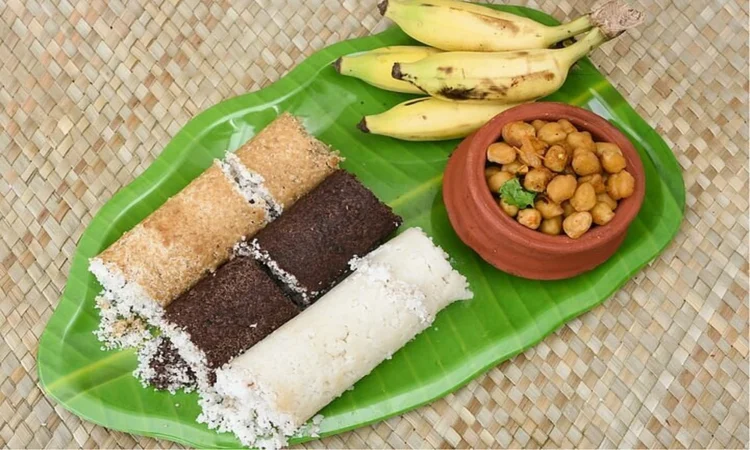
Kerala food changes as you travel: the Malabar north for Thalassery biryani and Kozhikode halwa, the backwaters for karimeen and toddy-shop curries, central Kerala for appam and stew, and a banana-leaf Sadhya anywhere, best at Onam. The rule of this food trail is simple. Eat each dish where it belongs.
What is Kerala food, region by region?
Kerala food splits roughly into culinary regions. The Malabar north, around Kozhikode (CCJ, Calicut) and Thalassery, leans non-vegetarian and Arab-influenced, heavy on ghee, biryani and beef, and does not use pork. The backwaters of Kuttanad and Alleppey (officially Alappuzha) run on freshwater fish and duck. Central Kerala and the old Syrian Christian kitchens gave us appam and stew. The south, around Thiruvananthapuram (Trivandrum), cooks lighter and more coconut-rich. Running through all of it is the Sadhya, the vegetarian banana-leaf feast.
Where do you find the best biryani in Kerala?
In the Malabar north, around Kozhikode and Thalassery. The Kerala biryani is not the basmati dish you get elsewhere. It uses a short-grain aromatic rice called jeerakasala, also known as khaima, which gives it a softer, more fragrant bite. You will find it with chicken, mutton or fish, often served with a side of raita and a date pickle. The south cooks a lighter biryani of its own, but for the real Malabar version, eat it where it was born. Pair it with nei choru, the ghee rice, if you see it.
What seafood should you eat in the backwaters?
Head to Kuttanad and Alleppey for freshwater fish and the dish the backwaters are known for: karimeen pollichathu, pearl spot marinated in spices, wrapped in a banana leaf and grilled (Kerala Tourism). Duck is the other star here, as a rich Kuttanad tharavu curry or duck mappas in coconut milk. Look too for kakka, freshwater clams roasted with coconut, and spicy fish curries soured with kudampuli, the Malabar tamarind. For the fieriest, most honest version of all of this, find a toddy shop, the shaap, best at a weekend lunch.
What is a Sadhya, and when should you eat one?
A Sadhya is a vegetarian feast of twenty or more dishes served on a banana leaf and eaten by hand, with rice, sambar, avial, thoran, olan, pickles and one or more payasams for dessert (Onmanorama). Restaurants serve it year-round, usually at lunch, so you can always find one. But the real thing is the Onam Sadhya in August or September, laid out at homes and temples across the state. If you are vegetarian, this is where Kerala food will spoil you.
What should you eat for breakfast in Kerala?
Breakfast is one of the best meals of the Kerala day. The classics are puttu with kadala curry, steamed rice cake with a spicy black chickpea curry, and appam with stew, a lacy rice hopper with a mild coconut-milk stew of vegetables, chicken or mutton. Idiyappam, soft rice noodles, is another. Appam and stew is at its best in the central part of the state. A roadside teashop or thattukada stall fills the gaps with snacks like parippuvada and ethakka appam.
Where do you find the best street food and sweets?
Kerala’s street food lives at the thattukada, the night stalls that fry Kerala parotta with beef, serve omelettes and dosa, and stay cheap. Kerala, unlike much of India, eats beef widely, and beef fry with flaky parotta is one of its signature plates. For sweets, Kozhikode’s SM Street, properly Mittai Theruvu or Sweet Meat Street, is the place for the glossy, chewy Kozhikode halwa and a row of snack shops (Onmanorama). Banana chips fried in coconut oil are the souvenir to carry home. One honest note: pick busy stalls with high turnover, eat things hot and fresh, and go easy on raw items and tap water if your stomach is sensitive.
Which Kerala dish goes where?
The table maps the dishes worth travelling for to the places they are best.
| Dish | Where it is best | Note |
|---|---|---|
| Thalassery biryani | Kozhikode and Thalassery, north | Short-grain jeerakasala rice, not basmati |
| Karimeen pollichathu | Alleppey and the Kuttanad backwaters | Pearl spot grilled in banana leaf |
| Sadhya | Statewide; a home or temple at Onam | Vegetarian banana-leaf feast, eaten by hand |
| Appam and stew | Central Kerala, around Kochi | Breakfast staple in coconut-milk stew |
| Beef fry and parotta | Thattukada stalls, Malabar, Thrissur | Kerala eats beef widely |
| Kozhikode halwa | SM Street, Kozhikode | Glossy and chewy, in many colours |
Frequently asked questions
What is the most famous dish in Kerala?
The Kerala Sadhya, a vegetarian feast of twenty-odd dishes served on a banana leaf, is the most iconic, above all at Onam. For non-vegetarians, Thalassery biryani from the Malabar north and karimeen pollichathu from the backwaters are the dishes people travel for. Each is best eaten in its home region.
Where can I eat the best biryani in Kerala?
In the Malabar north, around Kozhikode (CCJ, Calicut) and Thalassery. Kerala’s signature biryani uses short-grain jeerakasala rice rather than basmati, which gives it a distinct texture and aroma. The south has its own lighter version, but for the real Malabar biryani, head north.
Is Kerala food vegetarian or non-vegetarian?
Both, in plenty. Kerala has a deep vegetarian tradition, crowned by the Sadhya, so vegetarian travellers eat very well. It is also a big seafood and meat state, and unlike much of India, beef is widely eaten here, with beef fry and parotta a signature plate.
What is a toddy shop, and is the food good?
A toddy shop, or shaap, serves the local palm drink alongside some of the fieriest, best home-style curries in Kerala: spicy fish, tapioca with fish, clams and meat fries. Weekend lunch is the time to go. Pick a busy one, and the food matches any restaurant.
What should I eat for breakfast in Kerala?
Puttu with kadala curry, appam with stew, and idiyappam are the classic Kerala breakfasts, all built on rice and coconut. Appam and stew is especially good in the central part of the state. A teashop or thattukada stall adds snacks like parippuvada and ethakka appam.
Is it safe to eat street food in Kerala?
Kerala’s thattukada stalls and toddy shops serve some of its best food, so they are worth trying. Choose busy places with high turnover, eat things cooked fresh and hot, and go easy on raw items and tap water if your stomach is sensitive. Bottled water is a safe default.
To know more information about Kerala’s food and tourism, check out trip2keralam.com