
Alpine resorts are often perceived as standalone destinations, but in reality they function as extensions of the terrain they occupy. Mountains impose limits that go far beyond aesthetics, shaping how buildings can be placed, how infrastructure operates, and even how people move through the area. Steep slopes restrict construction zones, altitude affects material performance and energy use, and climate introduces long periods of snow cover or rapid weather changes. These constraints force developers to think less in terms of expansion and more in terms of adaptation. Unlike lowland resorts, where space can be reorganized relatively freely, alpine environments demand that every intervention aligns with the physical logic of the landscape.
Terrain as the Framework for Development
The geometry of the land plays a defining role in how resorts take shape. Valleys act as natural anchors, concentrating roads, railways, and the majority of buildings, while higher elevations remain partially or selectively developed. This creates a layered structure where accommodation, services, and transport systems are distributed along altitude gradients rather than spread evenly. Slopes dictate not only where construction is possible, but also how it must be executed. Buildings often follow contour lines instead of resisting them, resulting in stepped or terraced forms that minimize excavation and stabilize the ground. The terrain effectively becomes a framework, guiding development rather than being reshaped to fit it.
Climate as a Design Constraint
Climate in alpine regions is not just a background condition-it directly influences architectural and operational decisions. Snow loads require reinforced structures, while temperature fluctuations affect insulation strategies and energy systems. Seasonal variability also shapes how spaces are used throughout the year. A resort must function in both winter and summer, which leads to flexible design solutions that accommodate different patterns of activity. Access routes, for example, must remain reliable despite snow accumulation or potential avalanches, which often leads to the integration of tunnels, covered pathways, or elevated transport systems. These adaptations are not optional; they are essential for maintaining continuity in a highly variable environment.
Infrastructure Aligned with Natural Movement
Movement in mountainous terrain follows predictable paths defined by valleys and elevation changes. Successful resorts align their infrastructure with these natural flows instead of attempting to override them. Transport systems-whether roads, cable cars, or hiking paths-tend to mirror the direction of valleys or connect key points with minimal disruption to the landscape. This alignment reduces construction complexity and improves efficiency, as it works with existing gradients rather than against them. The placement of a hotel in Swiss Alps often reflects this logic, positioned where access routes converge naturally, allowing visitors to transition smoothly between accommodation, transport, and outdoor activities without unnecessary detours.
Architecture as a Mediator Between Built and Natural Space
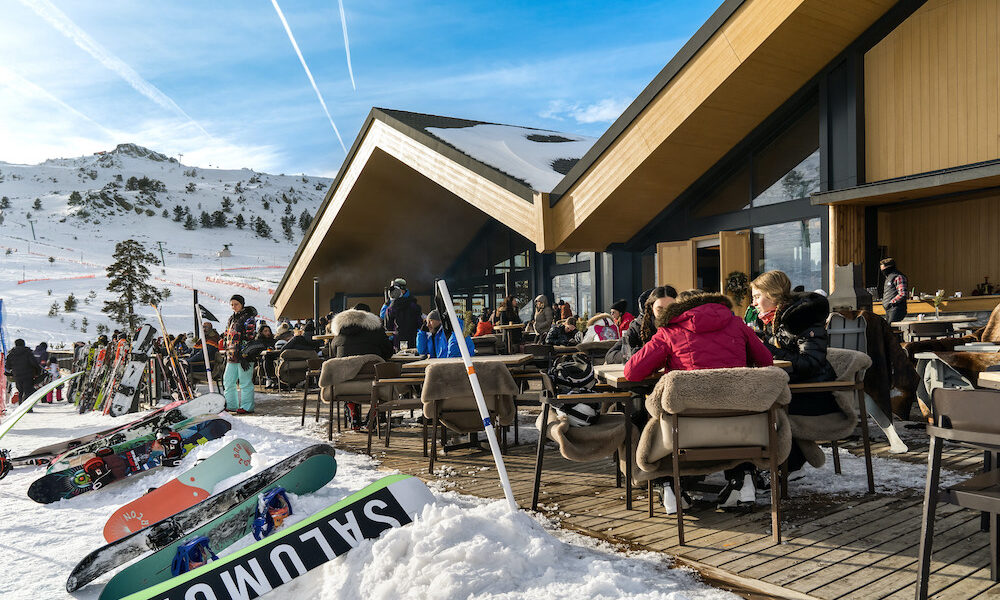
Architecture in alpine resorts rarely aims to dominate the landscape. Instead, it functions as a mediator that balances human needs with environmental conditions. Materials are often selected for both performance and visual integration, with wood and stone being common choices due to their durability and compatibility with the surroundings. Roof angles, façade orientations, and window placements are designed to manage snow, sunlight, and wind exposure. Even the scale of buildings is typically constrained, avoiding excessive verticality that would conflict with the horizontal layering of the terrain. This approach does not eliminate the presence of built structures, but it ensures they remain proportionate and context-aware.
Reducing Impact Through Integration
Integration with the landscape has practical consequences beyond aesthetics. By aligning development with natural systems, resorts can reduce their environmental footprint while improving usability. Minimizing earthworks lowers the risk of soil instability, while compact layouts decrease the need for extensive transport networks. Energy efficiency also benefits from this approach, as buildings positioned according to solar exposure and wind patterns require less artificial regulation. At the same time, accessibility improves because infrastructure follows intuitive routes, making navigation easier for visitors. The result is a system where environmental and functional goals reinforce each other rather than compete.
A System Rather Than a Collection of Buildings
Alpine resorts operate as interconnected systems where terrain, climate, infrastructure, and architecture continuously interact. Viewing them as isolated hospitality units misses the underlying logic that makes them functional. Every element-from the placement of a path to the orientation of a building-responds to external conditions that cannot be ignored or easily modified. This interconnectedness explains why some resorts feel intuitive and well-organized, while others struggle with congestion or inefficiency. The difference often lies in how well the built environment aligns with the natural one.