
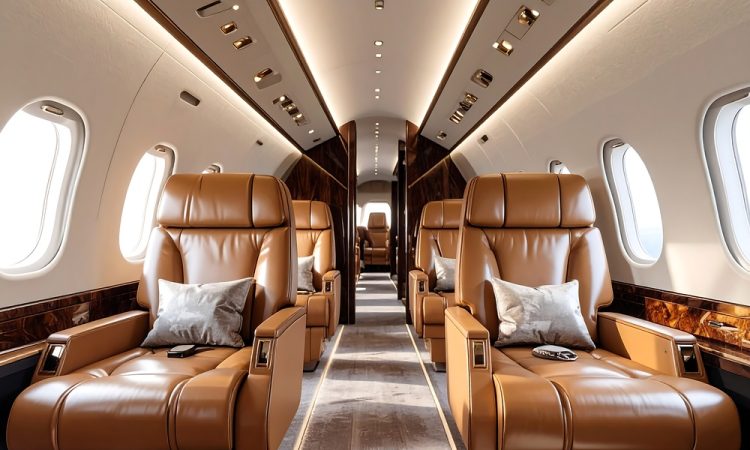
Wealthy travelers don’t fly like the rest of us. They expect their private jets to feel like flying penthouses. But here’s the thing: aircraft don’t care about your net worth. Weight limits, crash regulations, and cabin pressure affect every seat equally. Designing luxury seats is a brutal challenge for engineers. It needs to be stunning, cozy, secure, and flyable.
Comfort Meets Engineering
Crash testing destroys beautiful seats every day. Federal rules require seats to withstand 16Gs. It’s like crashing into concrete at full speed. The same seat that coddles a billionaire must protect them when things go wrong. No exceptions. Materials science makes this possible. Carbon fiber frames weigh nothing but handle incredible stress. Memory foam remembers your shape flight after flight. Gel cushions prevent numbness on long trips. Leather is treated with aerospace coatings for soft, wear-resistant durability. Each material costs a fortune, but passengers paying $10,000 per flight hour don’t care about price tags.
Motors and mechanisms hide throughout modern aircraft seats. Twenty different adjustments aren’t unusual. Your lower back needs support? There’s a motor for that. Feet need elevation? Another motor handles it. Want to sleep flat? Three motors work together to create a bed. The engineering resembles a Swiss watch more than furniture.
Space Efficiency Without Sacrifice
Jets burn money by the minute. Extra weight means extra fuel. Wasted space means fewer passengers or less range. Every cubic inch is critical with hourly costs in the thousands. Smart design creates luxury in small spaces. Seats swivel for conversation, then spin for privacy. Ottomans slide under seats when not needed. Tables fold into armrests thinner than paperback books. One executive seat might have fifteen hidden compartments for storing everything from laptops to champagne bottles.
Airlines discovered something interesting: lighter doesn’t mean weaker. Old steel frames weighed eighty pounds. New composite designs weigh thirty-five pounds but test stronger. Honeycomb aluminum replaced solid metal in less important areas. Minor changes, like titanium bolts, save weight.
Technology Integration
Business now happens at high altitudes. Modern VIP seats are packed with tech that would shock people from a decade ago. Outlets are hidden in armrests, sidewalls, and cup holders. Wireless chargers power phones without cables. Tablet mounts adjust to any viewing angle.
VIP seating reaches its peak when specialists understand how executives actually work during flights. LifePort excels at creating seats with integrated workspaces that disappear when not needed. Their designs offer sliding privacy panels, keyboard trays, and turbulence-resistant monitor mounts. Essentials are accessible, keeping the space uncluttered for relaxation.
Customization Without Limits
Cookie-cutter designs don’t work for people who customize everything in their lives. The CEO wants a mobile office, and the celebrity needs a vanity area. The diplomat requires secure communication equipment. Modern seating systems handle these demands through modularity. Floor tracks let seats slide into different positions. Morning configuration might face forward for work. Afternoon setup could face sideways for meetings. Evening arrangement might combine two seats into a sleeping area. Changes take minutes, not hours. No tools required.
Fabrics and finishes match individual tastes. Maybe you want leather that matches your Bentley. Perhaps fabric that won’t trigger allergies. Some clients request custom embroidery or family crests. The frame stays the same, but everything else becomes personally yours.
Conclusion
Private aviation seating has split completely from commercial airline standards. While these seats are more expensive than luxury cars, their experiences make the cost worthwhile. Their fusion of aerospace engineering and furniture craftsmanship achieves previously unimaginable feats from two decades prior. With private jet travel on the rise for top professionals, seats are continuously improving, demonstrating that engineering and comfort can be combined at any altitude.